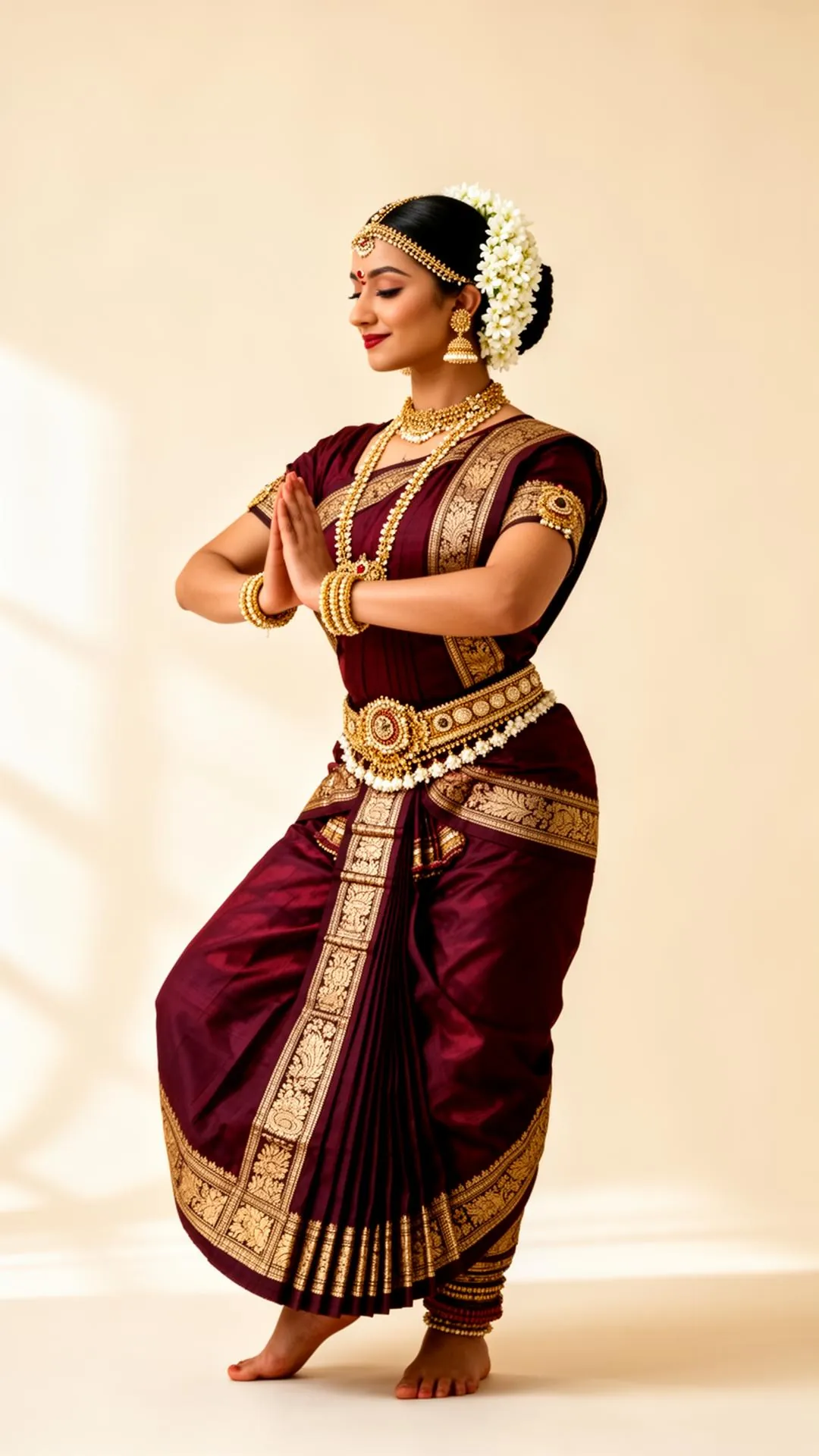
Choosing Costume Colours for the Stage
A colour chosen in daylight at the studio is not the colour the audience sees. Stage lighting, the backdrop and the camera all change it, and the differences are large enough to lose a costume entirely.
Stage Light Is Not Daylight
Warm stage lighting pushes reds and oranges forward and flattens blues and greens. A deep blue that looks rich in the studio can read as near-black from row ten. If the venue uses coloured gels, the shift is bigger still — ask the organisers what lighting they run.
Watch the Backdrop
The most common mistake is a costume in the same colour family as the curtain. Dark blue on a dark blue backdrop makes the dancer a floating pair of hands. Find out the backdrop colour before choosing, and pick something that separates from it.
Group Items Read as a Block
In a group, individual colour matters less than whether the group holds together. Formations read as shapes from the audience, so a single dancer in a slightly different shade breaks the shape more visibly than you would expect at close range.
Camera Behaves Differently Again
If the item is being filmed or televised, very saturated reds bleed on camera and fine gold work can shimmer. For a recorded performance, slightly less saturation usually reads better than the choice that looks strongest live.
Skin Tone and Contrast
The goal is separation — costume from backdrop, face from costume. A colour that sits too close to the dancer's skin tone under warm light drains the face. Contrast at the neckline is what keeps expression visible, which for abhinaya is the whole point.
Not sure what you need?
Call the studio and describe the item, the date and the dancer's age — we will tell you what it takes.
Costume Colours FAQs
- Warm light favours reds, oranges and golds. Deep blues and greens flatten and can read as black from a distance.
- The backdrop colour and whether coloured lighting gels are being used. Both change the choice.
- Yes. The group reading as one block matters more than any individual colour.
- Not always. Highly saturated reds bleed on camera, so slightly less saturation often films better.